Clear Aligners in Kovan, Singapore
Serving patients across Kovan, Hougang, Serangoon, Punggol, and surrounding areas of north-east Singapore.
✓ Removable & Near-Invisible
✓ Evening & Weekend Hours
✓ SDC-Registered Dentist
Clear aligners are a series of custom-made, removable, near-transparent plastic trays worn over the teeth to gradually shift them into a more aligned position. They are an alternative to fixed metal or ceramic braces for certain types of tooth misalignment. Each tray is worn for approximately one to two weeks before progressing to the next in the series. Clear aligners are removable for eating and oral hygiene, and are generally less visible than fixed appliances when worn.
Key Takeaways
- Clear aligners work through a series of removable plastic trays that progressively reposition teeth.
- Suitability depends on the type and severity of the misalignment — not all cases can be managed with aligners alone.
- Treatment duration varies widely: mild cases may take a few months; more complex cases can take 12–24 months or longer.
- Aligners must be worn 20–22 hours per day to be effective; compliance is critical to achieving planned tooth movements.
- Clear aligners are generally not subsidised under CHAS or claimable under MediSave.
- After completing aligner treatment, retainers are needed to maintain tooth position long-term.
- Complex orthodontic cases (e.g. significant skeletal discrepancies, impacted teeth) may require fixed braces or specialist referral.
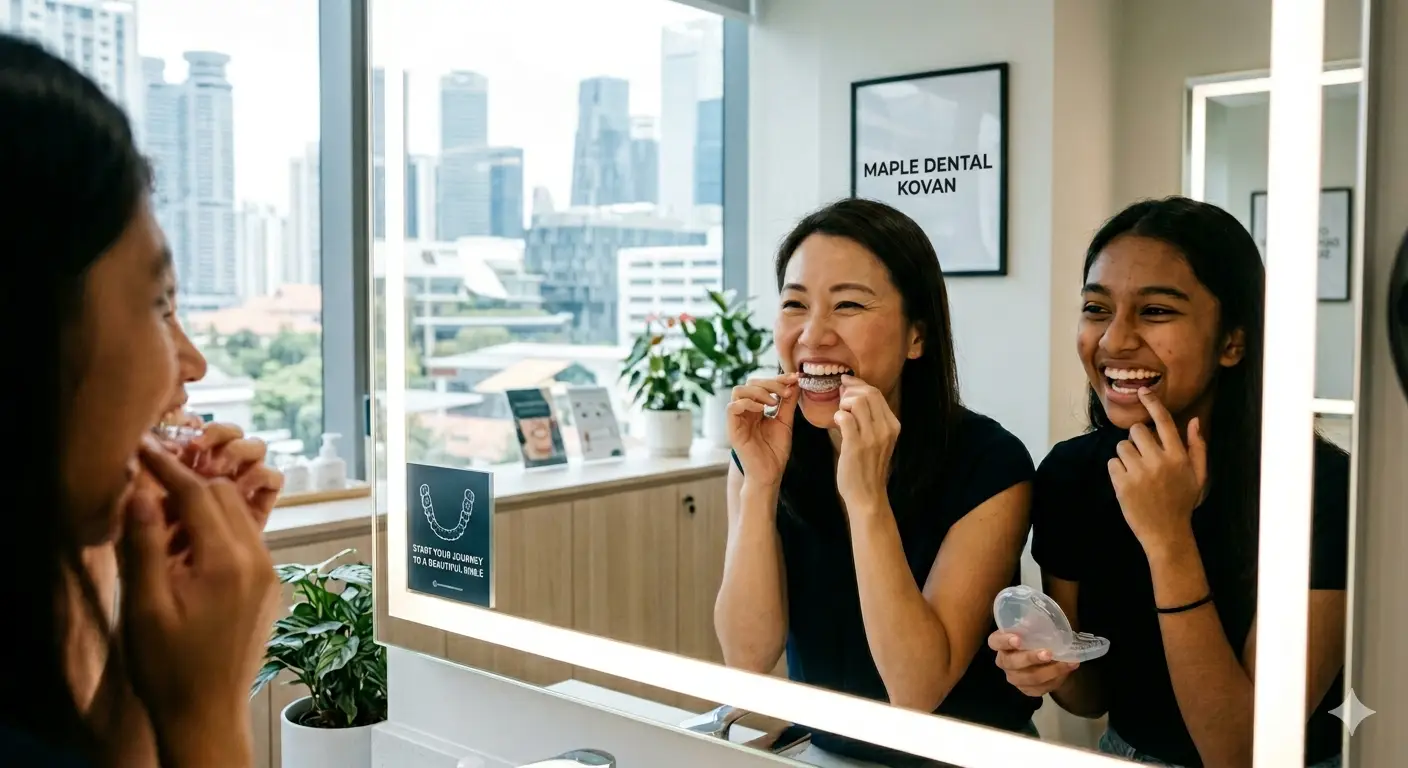
What Are Clear Aligners?
Clear aligners are orthodontic appliances made from a thin, medical-grade thermoplastic material. Using a series of incrementally different trays — each one moving the teeth a small amount — the overall treatment moves teeth toward the planned final position over time.
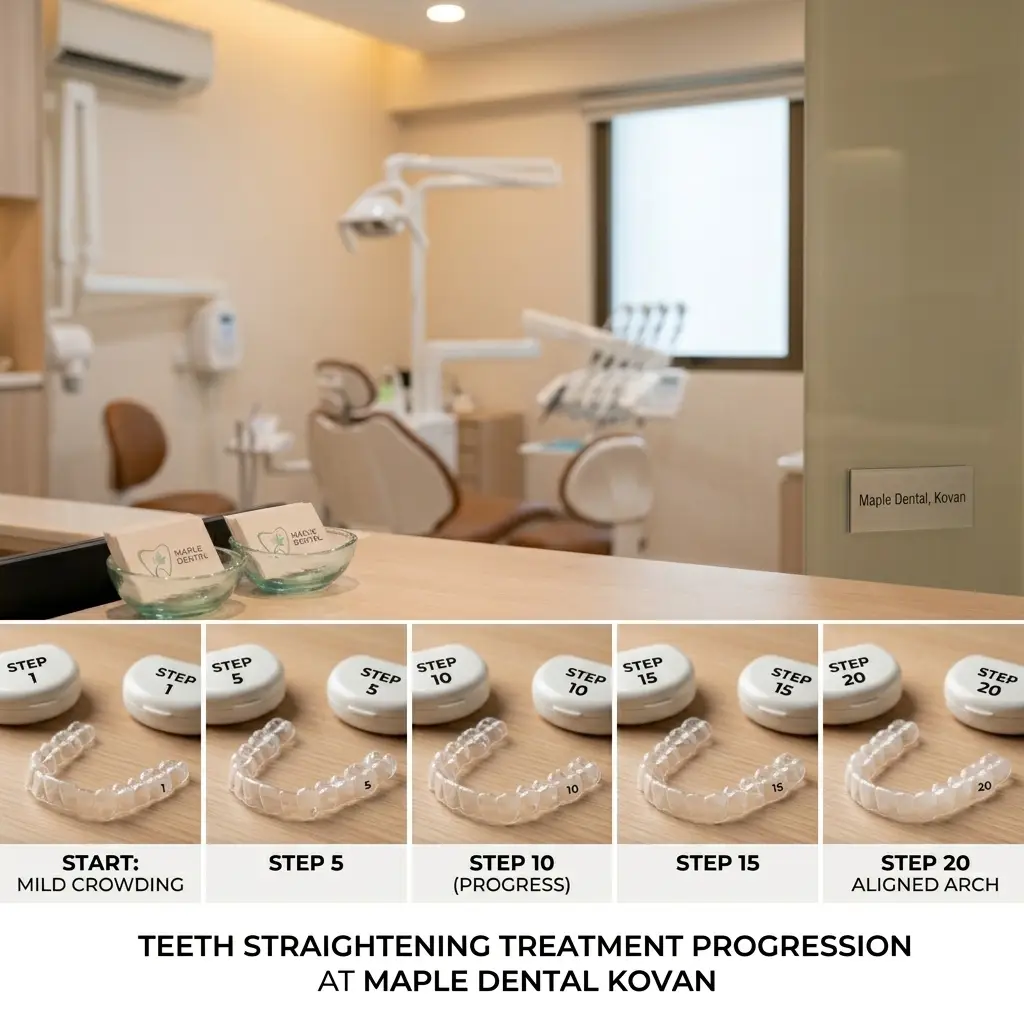
Treatment begins with a clinical assessment and, where appropriate, digital scans or impressions of the teeth. These are used to generate a computerised treatment simulation showing the planned sequence of tooth movements. A series of trays is then fabricated, each worn for one to two weeks before progressing to the next.
Because the trays are removable, patients can take them out to eat, drink anything other than plain water, and to brush and floss normally. This differs from fixed braces, which remain bonded to the teeth throughout treatment.
Invisalign and Other Clear Aligner Systems
Invisalign is a widely recognised brand of clear aligner treatment that uses a proprietary thermoplastic material and digital treatment planning system. Several other clear aligner systems exist, including in-house or third-party fabricated aligners. At Maple Dental, your dentist will discuss which aligner options are clinically appropriate for your case and explain the differences in the consultation.
Who Is a Suitable Candidate?
Clear aligners are effective for a range of tooth alignment concerns, but are not universally suitable for all cases. The type and severity of the misalignment, jaw relationship, bone levels, and oral health all influence whether aligners are an appropriate option. Your dentist will assess your case and advise honestly on what can realistically be achieved with aligners compared with other orthodontic options.
Often manageable with aligners…
- Mild to moderate crowding
- Mild to moderate spacing between teeth
- Minor deep bite or open bite (selected cases)
- Mild crossbite
- Relapse cases — teeth that have shifted after previous orthodontic treatment
- Adults and older teenagers with fully erupted permanent teeth
- Patients who prefer a removable, less visible appliance
May need fixed braces or specialist referral…
- Severe crowding or spacing
- Significant skeletal jaw discrepancies
- Severe rotations or large vertical tooth movements
- Impacted teeth (teeth that have not erupted into position)
- Patients with significant gum disease or bone loss
- Children or younger teens with mixed dentition
- Cases requiring tooth extractions as part of orthodontic planning
- Patients unable to commit to wearing aligners 20–22 hours per day
The Clear Aligner Process at Maple Dental (Kovan)
Treatment broadly follows the sequence below. The exact number of appointments and duration depends on the complexity of your case and how your teeth respond to treatment.
- Initial consultation and assessment
Your dentist examines your teeth, gums, bite, and facial profile. X-rays may be taken. The type and degree of misalignment is assessed to determine whether clear aligners are clinically suitable, and what can realistically be achieved. - Digital records and treatment planning
If you proceed, impressions or a digital scan of your teeth are taken. These are used to generate a 3D computerised treatment simulation showing the planned sequence of tooth movements from start to finish. You can review this simulation before committing to treatment. - Aligner fabrication
The full series of custom trays is fabricated based on the treatment plan. Depending on the system used, this typically takes two to four weeks. - Fitting appointment and attachments
At the fitting appointment, small tooth-coloured attachments (composite resin bumps) may be bonded to certain teeth. These help the trays grip and exert the precise forces needed for planned tooth movements. Your first set of trays is fitted and you are shown how to insert and remove them. - Active treatment — wearing the trays
You wear each tray for approximately one to two weeks, then progress to the next. Aligners must be worn for 20–22 hours per day. They are removed only for eating, drinking (anything other than water), brushing, and flossing. Regular check-up appointments allow your dentist to monitor progress. - Refinements (if needed)
Teeth do not always move exactly as planned. Mid-course corrections or additional refinement trays may be needed. This is a normal part of aligner treatment and is discussed at the outset. - Completion and retention
Once the planned tooth movements are achieved, retainers are provided. Retainers must be worn consistently — initially full-time, then nightly long-term — to prevent teeth from gradually drifting back toward their original position. Retention is a permanent commitment.
What Clear Aligners Can and Cannot Do
Potential advantages compared with fixed braces
Because clear aligners are removable, there are no dietary restrictions — patients can eat normally and clean their teeth without working around brackets and wires. Many patients find aligners more comfortable than fixed braces in terms of soft tissue irritation, though some discomfort when progressing to a new tray is normal.
The near-invisible appearance is a significant factor for many adults and older teenagers who prefer not to have visible orthodontic appliances. Aligners can also be removed for important social or professional occasions, though this should not become a habit that reduces total wearing time.
Important limitations
- Aligners require strict compliance. If worn for fewer hours than prescribed, teeth will not move as planned and treatment duration extends.
- Not all tooth movements are well-suited to aligners. Significant rotations, large vertical movements, and complex bite corrections may require fixed appliances.
- Attachments bonded to the teeth — while tooth-coloured — are visible on close inspection and may affect aesthetics during treatment.
- Aligners may feel uncomfortable when a new tray is first fitted, particularly in the first day or two of each new tray.
- Speech may be affected, particularly in the early stages of treatment, as the tongue adapts to the trays.
- Retainers after treatment are a lifelong commitment. Without consistent retention, teeth will tend to drift back over time.
Risks and Possible Complications
Clear aligner treatment carries fewer risks than surgical dental procedures, but is not without potential complications. Your dentist will discuss these before treatment begins.
- Root resorption — some degree of root shortening can occur with any orthodontic tooth movement; this is usually mild and clinically insignificant, but is monitored
- Gum recession — tooth movement in patients with thin gum tissue carries a small risk of recession
- Relapse — teeth returning toward their original position if retainers are not worn consistently
- Unexpected tooth movement — teeth occasionally do not respond exactly as planned; refinements may be needed
- Temporomandibular joint (TMJ) discomfort — aligner treatment can occasionally affect the bite and jaw joints; this should be reported to your dentist promptly
- Increased plaque accumulation — if oral hygiene is not maintained carefully during treatment, risk of tooth decay and gum disease increases
- Attachment debonding — attachments may occasionally detach and need to be re-bonded at a clinic visit
Cost of Clear Aligners in Singapore
The cost of clear aligner treatment varies depending on the complexity of the case, the number of aligners required, and the system used. Mild cases requiring fewer trays generally cost less than complex or full-arch cases.
At Maple Dental (Kovan), a written cost estimate is provided following your consultation and assessment. This sets out the full cost before you are asked to commit to treatment. There are no hidden costs — refinements within a reasonable scope are typically included in the original treatment fee.
CHAS and MediSave
Clear aligner and orthodontic treatments are not currently subsidised under the CHAS scheme, which covers basic dental procedures. MediSave cannot be used for orthodontic treatment. Payments can be made by cash, NETS, PayNow, Visa, Mastercard, or AMEX. Patients should check with their insurance provider directly regarding any dental insurance coverage for orthodontic treatment.

Treatment Summary
| Patient concern | What it may mean | Possible approach | When to book |
|---|---|---|---|
| Crowded front teeth | Insufficient space causing teeth to overlap | Clear aligners (mild–moderate), or fixed braces (severe) | At consultation to assess severity and options |
| Gaps between teeth | Spacing due to missing teeth, small teeth, or jaw size | Clear aligners for mild–moderate spacing; larger gaps may need other options | At consultation — cause of spacing affects treatment choice |
| Teeth shifting after previous braces | Orthodontic relapse from inconsistent retainer wear | Clear aligners often well-suited for relapse cases | At consultation — early relapse is easier to correct |
| Overbite or underbite | Vertical or horizontal bite discrepancy | Depends on severity — mild cases may be manageable with aligners; significant skeletal cases may need specialist input | At consultation for clinical assessment of the bite |
| Wanting a less visible alternative to braces | Preference for aesthetics during treatment | Clear aligners if case is suitable; ceramic braces as alternative | At consultation to discuss options and suitability |
Singapore Patient Considerations
Location and access
Maple Dental is located at 204 Hougang Street 21 #01-99, Singapore 530204, a 3-minute walk from Kovan MRT station (North East Line, NE13). The clinic serves patients from Kovan, Hougang, Serangoon, Punggol, Sengkang, Tampines, and central Singapore.
Appointment timing
Evening and weekend appointments make it possible for working adults to attend without taking time off work. Regular aligner check-ups are brief and can typically be scheduled at intervals of 6–8 weeks.
- Monday – Friday: 9am – 9pm
- Saturday & Sunday: 9am – 5pm
- Public Holidays: Closed
Call 6288 4995 or WhatsApp 9131 0330 to check availability or book a consultation.
Subsidies and payment
Clear aligner treatment is not covered under CHAS or MediSave. Payment is accepted via cash, PayNow, NETS, Visa, Mastercard, and AMEX. If you hold a dental insurance policy that includes orthodontic coverage, we recommend checking your entitlement with your insurer before starting treatment.
Common Patient Questions
How long does clear aligner treatment take?
Treatment duration varies considerably depending on the complexity of the misalignment and how consistently the aligners are worn. Mild cases may be completed in as few as 3–6 months. Moderate cases typically take 12–18 months. Complex cases may take longer. Your dentist will give you an estimated duration at the consultation based on your specific case, though this is a projection and not a guarantee.
Do clear aligners hurt?
Most patients experience some mild pressure or discomfort for the first day or two when they switch to a new tray — this is a sign that the aligner is actively moving the teeth. The discomfort typically settles within 48 hours. Clear aligners generally cause less soft tissue irritation than fixed braces, as there are no brackets or wires. If you experience significant or persistent pain, contact your dentist.
Can I eat and drink normally with clear aligners?
Yes — aligners are removed before eating and drinking anything other than plain water. This means there are no food restrictions, unlike with fixed braces. After eating, you should brush and floss before reinserting the aligners to prevent trapping food particles or bacteria against the teeth.
How many hours a day do I need to wear the aligners?
Clear aligners should be worn for 20–22 hours per day to achieve the planned tooth movements on schedule. Wearing them for fewer hours than prescribed will slow treatment or may result in teeth not moving as planned, potentially requiring additional trays or extending the overall treatment time.
Will clear aligners affect my speech?
Some patients notice a slight lisp or change in speech when they first start wearing aligners. This is because the tongue needs to adapt to the presence of the trays. For most patients, any speech change resolves within a few days to a couple of weeks as they adjust.
What is the difference between Invisalign and other clear aligners?
Invisalign is a specific brand of clear aligner manufactured by Align Technology, using their proprietary SmartTrack material and iTero digital scanning system. Other clear aligner systems exist, including those fabricated by other manufacturers. The key differences lie in the material properties, treatment planning software, and the range of cases each system handles. Your dentist can advise which option is most appropriate for your case.
Do I need to wear retainers after treatment?
Yes — retention after orthodontic treatment is essential regardless of whether aligners or fixed braces were used. Teeth naturally tend to drift back toward their original positions over time. Retainers are worn full-time initially, then typically nightly on a long-term basis. Failing to wear retainers consistently is the most common reason for orthodontic relapse. This is a lifelong commitment.
Can I get clear aligners if I have had dental implants or crowns?
This depends on the location and number of implants or crowns, and the tooth movements planned. Dental implants are fixed in the bone and cannot be moved by orthodontic forces. If an implant is in a position that would interfere with the planned movements of adjacent teeth, aligners may not achieve the intended result. Your dentist will assess this at consultation.
Is clear aligner treatment suitable for teenagers?
Clear aligners can be used for teenagers whose permanent teeth have fully erupted. Compliance — wearing the aligners for the required 20–22 hours daily — is essential. Younger patients who may struggle with this consistency may be better suited to fixed appliances. Your dentist will discuss the options based on the patient’s age, dental development, and case complexity.
Does CHAS or MediSave cover clear aligner treatment?
No. Orthodontic treatment including clear aligners is not on the CHAS list of subsidised dental procedures, and MediSave cannot be used for orthodontic treatment. If you have a dental insurance plan that includes orthodontic benefits, check your policy terms directly with your insurer.
This information is general in nature and does not replace an individual dental consultation. The suitability of clear aligner treatment varies between patients and must be assessed by a registered dentist based on your clinical history, tooth positions, and bite. Treatment outcomes and timelines cannot be guaranteed. Always seek professional dental advice before proceeding with any dental treatment.
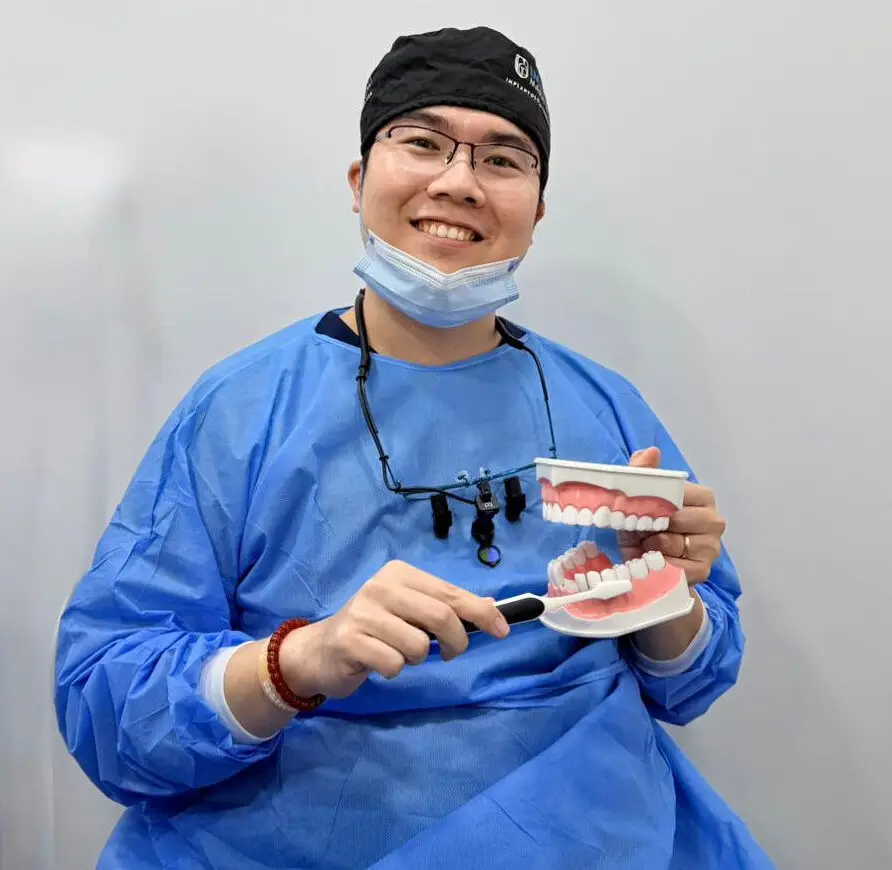
Dentist, Maple Dental (Kovan) · Last reviewed: May 2026
Dr Lam holds a Bachelor of Dental Surgery from the National University of Singapore and practises general dentistry including orthodontic assessment and clear aligner treatment at Maple Dental (Kovan), Singapore.
Thinking About Straighter Teeth?
Start With a Consultation.
A clinical assessment will confirm whether clear aligners are suitable for your case and what can realistically be achieved. Maple Dental offers evening and weekend appointments at our Kovan clinic in north-east Singapore.
204 Hougang Street 21 #01-99, Singapore 530204
Tel: 6288 4995 | WhatsApp: 9131 0330