Clear Aligners in Kovan, Singapore
Serving patients across Kovan, Hougang, Serangoon, Punggol, and surrounding areas of north-east Singapore.
✓ Removable & Nearly Invisible
✓ CHAS Accepted
✓ Evening & Weekend Hours
✓ SDC-Registered Dentist
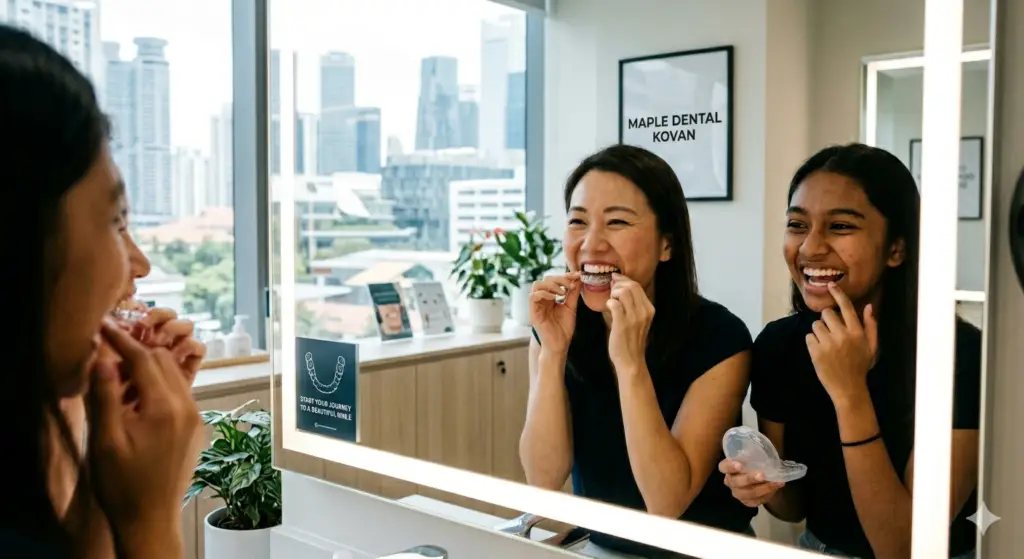
Clear aligners are a series of custom-made, removable transparent trays that gradually shift the teeth into a more aligned position. Each tray is worn for one to two weeks before being replaced with the next in the series. Unlike fixed metal braces, they can be removed for eating and brushing. Clear aligners are generally suited to mild to moderate orthodontic concerns; suitability depends on the nature and complexity of the misalignment and must be assessed by a dentist. Maple Dental (Kovan) offers Invisalign and Smartee clear aligner systems.
Key Takeaways
- Clear aligners use a series of removable transparent trays to move teeth gradually over time.
- They must be worn for 20–22 hours per day to be effective — compliance is essential.
- Best suited to mild to moderate crowding, spacing, and certain bite issues; complex cases may need fixed braces.
- Treatment length varies widely — typically 6 to 18 months depending on the degree of correction needed.
- Attachments (small tooth-coloured bumps bonded to teeth) are often used to help the trays grip and move teeth more precisely.
- Retainers must be worn after treatment to prevent teeth from shifting back.
- Regular check-up appointments allow your dentist to monitor progress throughout treatment.
What Are Clear Aligners?
Clear aligners are orthodontic appliances made from smooth, transparent medical-grade plastic. Rather than using brackets and wires fixed to the teeth, a set of custom-fabricated trays — each slightly different from the last — is used to move teeth incrementally toward their target position.
Treatment begins with a scan or impression of your teeth, which is used to create a digital model of your current bite. From this, a treatment plan is designed showing the intended tooth movement at each stage. A full series of trays is then manufactured and worn in sequence, with each tray typically changed every one to two weeks. Progress appointments are scheduled periodically — usually every six to eight weeks — for your dentist to check that teeth are tracking as planned.
Small tooth-coloured resin bumps called attachments are often bonded to specific teeth at the start of treatment. These give the aligner trays extra purchase on the tooth surface, enabling more controlled or complex movements that the tray alone could not achieve.
Clear Aligner Systems at Maple Dental
Maple Dental (Kovan) offers two clear aligner systems: Invisalign and Smartee.

Invisalign is one of the most widely recognised clear aligner brands worldwide, developed by Align Technology. It uses a proprietary thermoplastic material (SmartTrack) and a digital planning platform (ClinCheck) to map out tooth movement in advance. Invisalign is available in a range of treatment tiers — from Invisalign Lite for minor corrections to Invisalign Comprehensive for more extensive cases.

Smartee is a clear aligner system developed in Asia and widely used across Singapore and the region. It offers a comparable approach to Invisalign — custom-fabricated transparent trays planned from a digital scan — at a price point that may suit patients seeking a cost-effective alternative for mild to moderate cases. Your dentist will advise which system is more appropriate for your clinical situation and goals.
What Can Clear Aligners Address?
Clear aligners are most commonly used to treat:
- Crowding — teeth that overlap or are positioned out of line due to insufficient space in the arch
- Spacing — gaps between teeth
- Mild to moderate bite issues — including certain cases of overbite, underbite, crossbite, or open bite
- Relapse after previous orthodontic treatment — teeth that have shifted after earlier braces or aligner treatment
Clear aligners are generally less effective for severe crowding, significant skeletal discrepancies, complex bite corrections, or cases requiring tooth extractions combined with heavy tooth movement. Your dentist will advise whether clear aligners are clinically appropriate for your specific case.
Am I a Suitable Candidate?
Suitability for clear aligner treatment is assessed at consultation. Your dentist will examine your teeth and bite, take records (including photographs, dental X-rays, and a digital scan), and review your dental and medical history before making any recommendations.
May be suitable if you…
- Have mild to moderate crowding, spacing, or bite concerns
- Have healthy teeth and gums (or have had active issues treated first)
- Are committed to wearing the trays 20–22 hours per day
- Are an adult or older teenager with permanent teeth fully erupted
- Are prepared to wear retainers long-term after treatment
- Have realistic expectations about the degree of correction achievable
May not be suitable if you…
- Have severe crowding or complex bite discrepancies
- Have active, untreated tooth decay or gum disease
- Have significant missing teeth affecting the treatment plan
- Are unwilling or unable to commit to consistent wear time
- Have certain types of existing dental work (e.g. bridgework) that may limit tooth movement options
- Are a child with mixed dentition (baby and adult teeth still present)
- Require skeletal correction that orthodontics alone cannot achieve
The Clear Aligner Process at Maple Dental (Kovan)
Clear aligner treatment takes place across multiple appointments over the course of months. The outline below is a general guide — your individual plan will be tailored to your case.
- Initial consultation and records
Your dentist examines your teeth, gums, and bite and discusses your concerns and goals. Clinical photographs, dental X-rays, and a digital intraoral scan are taken to provide the data needed for treatment planning. - Treatment planning and tray design
Using your scan, a 3D digital simulation of your treatment is produced, showing the planned tooth movements from start to finish. Your dentist reviews the plan with you, explaining the number of trays, estimated duration, and what outcome is realistic for your case. - Preparatory work (if needed)
Active decay, gum disease, or other dental issues are treated before aligners are placed. Some cases also require interproximal reduction (IPR) — the removal of a small amount of enamel between specific teeth to create space for movement. - Attachment placement and first tray fitting
Where attachments are required, small tooth-coloured resin bumps are bonded onto designated teeth. Your first set of aligner trays is then fitted and your dentist demonstrates how to insert, remove, and care for them. - Active treatment — wearing your trays
You progress through each tray in the series, wearing each one for the prescribed duration (typically one to two weeks) for 20–22 hours per day. Trays are removed only for eating, drinking anything other than water, and brushing and flossing. - Progress appointments
You attend check-up appointments approximately every six to eight weeks. Your dentist checks that your teeth are tracking as planned and hands over the next set of trays. If teeth are not tracking as expected, adjustments to the plan — including refinements — may be discussed. - Refinements (if needed)
After the initial series of trays is complete, a review scan is taken. If further tooth movement is needed, a new series of refinement trays is fabricated to fine-tune the result. Refinements are common and are a normal part of aligner treatment. - Retention
Once the desired position is reached, your dentist will provide retainers. Retainers must be worn consistently — typically every night long-term — to hold the teeth in their new position. Without retention, teeth will shift back over time.
What Clear Aligners Can and Cannot Do
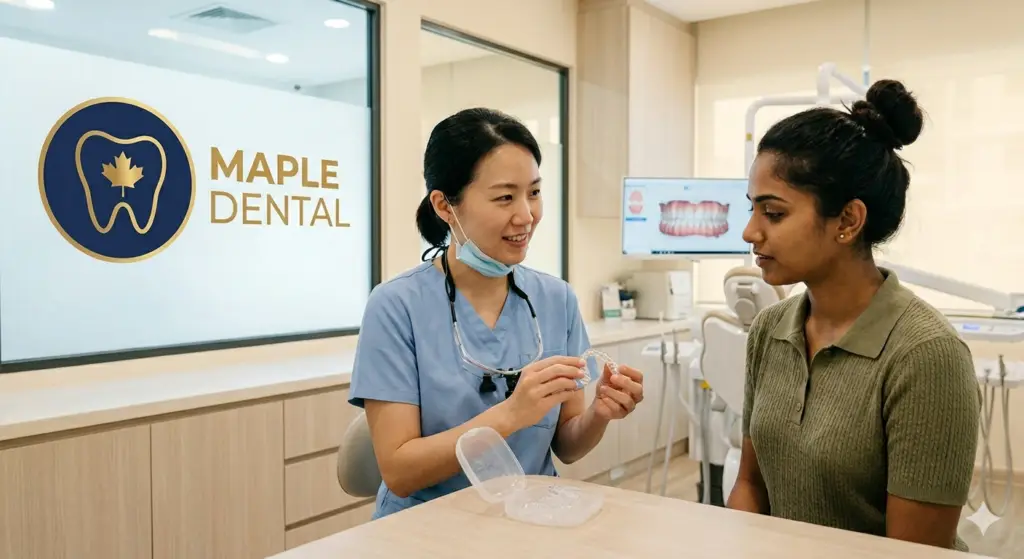
Potential advantages compared with fixed braces
Because clear aligners are removable, there are no dietary restrictions — foods that would dislodge or damage fixed brackets and wires are not a concern. Brushing and flossing can be performed on the teeth directly, without navigating around wires, which can make it easier to maintain good oral hygiene throughout treatment.
The trays are transparent and close-fitting, making them considerably less visible than metal brackets and wires when worn. Some patients find this significant if they are self-conscious about the appearance of orthodontic treatment in an adult or professional context.
Clear aligners allow your dentist to map out the entire expected tooth movement digitally before treatment begins. This gives both the patient and the clinician a clear understanding of the plan, the number of trays involved, and the anticipated outcome.
Important limitations
- Clear aligners only work if worn consistently. Forgetting or choosing not to wear the trays will slow or compromise the result. Compliance is the single biggest variable in treatment outcomes.
- Eating and drinking with the trays in (other than plain water) stains them and can cause decay by trapping food particles and sugars against the teeth. Trays must be removed before all meals and drinks.
- Not all orthodontic problems can be corrected with clear aligners. Complex cases or those involving significant jaw discrepancies may require fixed braces, or orthodontic treatment by a specialist.
- Teeth will shift back without retainers. Long-term retention is not optional — it is a permanent requirement of orthodontic treatment.
- Clear aligners may be less effective for rotating cylindrical teeth (such as canines) or for intruding teeth compared with fixed appliances.
Risks and Possible Side Effects
Clear aligners carry a lower risk profile than surgical treatments, but there are still considerations your dentist will discuss with you before treatment begins.
- Root resorption — all orthodontic tooth movement carries a small risk of shortening of the tooth roots; generally minor in most cases but monitored with periodic X-rays
- Tooth sensitivity — mild discomfort or sensitivity when new trays are first fitted is common; usually settles within a few days
- Gum and tooth irritation — tray edges can occasionally cause localised irritation; can usually be smoothed by your dentist
- Relapse — teeth shifting back after treatment if retainers are not worn as instructed
- Decay risk — if trays are worn while eating or drinking, or oral hygiene is inadequate during treatment
- Poor tracking — teeth not moving as planned; may require adjustments, refinements, or switching to a different treatment approach
- Temporomandibular joint (TMJ) symptoms — bite changes can occasionally trigger or worsen jaw joint discomfort; inform your dentist if you develop any jaw pain during treatment
Alternatives to Clear Aligners
Clear aligners are one approach to orthodontic treatment. Your dentist will explain which options are clinically appropriate for your degree of misalignment.
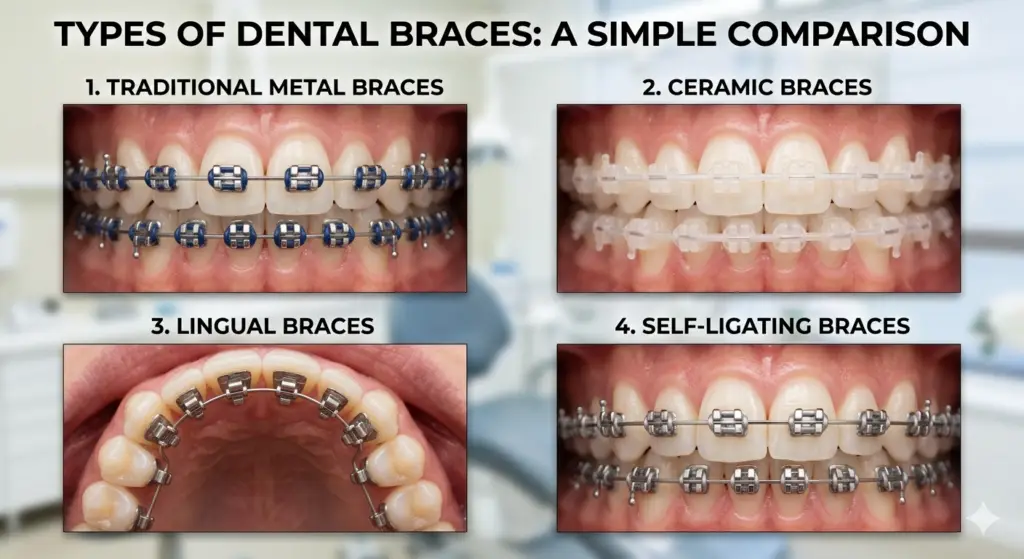
- Metal braces — Fixed brackets and wires bonded to the teeth. Highly effective across a wide range of orthodontic problems, including complex cases. More visible than clear aligners. Dietary restrictions apply. Generally lower cost for comprehensive treatment.
- Ceramic (tooth-coloured) braces — Fixed brackets that are less visible than metal, with a similar mechanism. More noticeable than clear aligners but suitable for a broader range of cases than aligners alone.
- Lingual braces — Fixed braces placed on the inner (tongue-facing) surfaces of the teeth, making them invisible from the outside. Technically demanding and generally higher cost. Not offered at all general dental clinics.
- Specialist referral — Complex orthodontic cases are sometimes best managed by a registered specialist orthodontist, who has undergone additional postgraduate training in orthodontics. Your dentist can advise if specialist management is appropriate for your case.
- No treatment — For mild concerns with no functional impact, monitoring without intervention is a valid option. Your dentist can explain the implications of deferring treatment for your specific situation.
Wearing and Caring for Your Aligners
Daily wear routine
Clear aligners must be worn for 20–22 hours each day to deliver the planned tooth movement within the expected timeframe. The trays are removed only for eating, drinking anything other than plain water, and for brushing and flossing. After eating, rinse or brush your teeth before reinserting the trays to avoid trapping food debris or sugary liquids against the enamel.
Cleaning your trays
- Rinse trays with cool water when you remove them
- Clean them with a soft-bristled toothbrush and a small amount of clear (not coloured) soap — toothpaste can scratch the plastic
- Avoid hot water, which can warp the tray shape
- Do not drink coffee, tea, or coloured beverages with the trays in — they will stain
- Store trays in their case when not in use; loose trays are easily lost or damaged
Oral hygiene during treatment
Brush your teeth after every meal and before reinserting your trays. Floss at least once daily. Because food is more frequently in contact with the teeth during a day of removing and replacing trays, maintaining diligent hygiene throughout treatment is important to prevent decay and gum inflammation.
Retainers after treatment
Once your final tray is complete and the desired tooth position has been reached, your dentist will provide retainers. Retainers may be removable (similar in appearance to aligners) or fixed (thin wires bonded to the inside of certain teeth). Most patients wear removable retainers nightly for the long term. Without consistent retainer wear, teeth will gradually shift back — this is a biological reality of orthodontic treatment, not a flaw specific to clear aligners.
Cost of Clear Aligners in Singapore
Clear aligner costs vary depending on the complexity of the case, the number of trays and refinements required, and the system used. Simpler cases with limited tooth movement require fewer trays and cost less; comprehensive full-arch corrections are more involved.
At Maple Dental (Kovan), clear aligner treatment starts from approximately S$3,000 for straightforward cases. A full written cost estimate is provided after your initial consultation and records appointment, once the scope of treatment has been assessed.
CHAS and MediSave
Maple Dental accepts CHAS (Community Health Assist Scheme) for eligible dental treatments. Clear aligner treatment is an elective orthodontic procedure and is not currently covered under CHAS subsidies. Please check the CHAS website for the current list of subsidised dental procedures.
MediSave cannot be used for orthodontic treatment such as clear aligners. All patients receive a written cost breakdown before treatment begins.

Treatment Summary
| Patient concern | What it may mean | Possible approach | When to book |
|---|---|---|---|
| Crowded or overlapping front teeth | Insufficient arch space for tooth alignment | Clear aligners (mild–moderate); fixed braces for severe crowding | At any time — assessment determines suitability |
| Gaps between teeth | Spacing between some or all teeth | Clear aligners are often effective for spacing correction | At consultation — straightforward spacing cases are commonly treatable |
| Overbite, underbite, or crossbite | Upper and lower teeth not meeting correctly | Depends on severity — aligners, fixed braces, or specialist referral | At consultation — bite complexity determines options |
| Teeth have shifted after previous braces | Orthodontic relapse due to inconsistent retainer wear | Clear aligners or fixed braces; retainer provided after treatment | As soon as you notice the shift — the earlier, the simpler the correction |
| Unhappy with smile appearance but want a discreet option | Aesthetic concern; prefers removable, low-visibility option | Clear aligners if clinically suitable | At consultation — suitability check is the first step |
Singapore Patient Considerations
Location and access
Maple Dental is located at 204 Hougang Street 21 #01-99, Singapore 530204. The clinic is accessible from Kovan MRT station (North East Line) and serves patients from Hougang, Serangoon, Punggol, Sengkang, Tampines, and central Singapore.
Appointment timing
Clear aligner consultations and progress appointments are available during Maple Dental’s regular hours, including evening appointments on weekdays — convenient for working adults and students who cannot attend during standard daytime hours.
- Monday – Friday: 9am – 9pm
- Saturday & Sunday: 9am – 5pm
- Public Holidays: Closed
Call 6288 4995 or WhatsApp 9131 0330 to check availability.
Subsidies and payment
CHAS is accepted at Maple Dental for eligible procedures. Clear aligner treatment is an elective orthodontic procedure and is not currently on the CHAS subsidised list. All patients receive a written cost estimate before any treatment begins.
Urgent or unexpected concerns during treatment
If a tray cracks, becomes lost, or causes unexpected pain or irritation during treatment, contact Maple Dental on 6288 4995 to arrange a review. Do not skip too far ahead in the tray sequence without guidance — this can lead to tracking problems that are difficult to correct.
Common Patient Questions
How long does clear aligner treatment take?
Treatment length varies considerably depending on the degree of misalignment being corrected. Simple spacing or mild crowding cases may be completed in six months or less; moderate comprehensive corrections typically take twelve to eighteen months. Cases requiring refinements may extend beyond the initial estimate. Your dentist will provide a more specific timeline at consultation after assessing your case.
Do clear aligners hurt?
Some pressure and mild discomfort when a new tray is first inserted is normal — this is the aligner working to move teeth. It typically settles within a couple of days. Clear aligners generally cause less soft-tissue irritation than metal brackets and wires, but tray edges can occasionally cause localised soreness. Let your dentist know at your next appointment if discomfort is persistent or severe.
Can I eat and drink normally with clear aligners?
You must remove your aligners before eating and before drinking anything other than plain water. Eating with them in will damage the trays and trap food and bacteria against your teeth. Once you have eaten, brush your teeth (or at least rinse) before reinserting the trays. This is a routine most patients adapt to quickly, though it does require planning — particularly if you graze throughout the day.
Are clear aligners as effective as metal braces?
For mild to moderate cases, well-executed clear aligner treatment can achieve comparable results to fixed braces. For complex orthodontic cases — severe crowding, significant bite discrepancies, or treatment requiring multiple extractions — fixed braces tend to offer more reliable control over tooth movement. The best option depends on your specific presentation; your dentist will be honest about what clear aligners can and cannot achieve for your case.
What happens if I don’t wear my aligners for the full 20–22 hours?
Teeth will not move as planned, and the trays will not fit correctly when you try to progress to the next one. Consistently short wear times slow treatment, can cause poor tracking, and may ultimately require refinements or extend the treatment significantly. Compliance is the patient’s most important contribution to achieving a good result.
Will people be able to see my aligners?
Clear aligners are designed to be discreet. When fitted correctly and in good condition, they are largely invisible in normal conversation and at a typical social distance. Attachments bonded to the teeth can be slightly noticeable on close inspection. Over time, trays can pick up minor staining from coffee, tea, or turmeric even when removed during consumption — replacing trays on schedule minimises this.
Do I need to wear a retainer after aligners?
Yes — this is a permanent requirement of all orthodontic treatment, not specific to clear aligners. Teeth have a natural tendency to shift back toward their original position once active treatment is complete. Retainers hold the result in place. Most patients wear removable retainers nightly for the long term; some have a fixed wire bonded behind the front teeth. Your dentist will advise on the appropriate retainer type for your case.
Can I have clear aligner treatment if I have crowns, veneers, or other dental work?
Existing dental restorations do not automatically rule out clear aligner treatment, but they need to be considered in the planning. Attachments cannot always be bonded to certain crown or veneer materials as reliably as to natural enamel. Some restorations may need to be replaced at the end of treatment if the tooth position changes significantly. Your dentist will review your dental history and discuss implications at consultation.
What is IPR and will I need it?
IPR (interproximal reduction) is the controlled removal of a very small amount of enamel from between adjacent teeth to create space for tooth movement. It is a routine part of many clear aligner treatment plans, particularly for crowding cases. The amount removed is carefully calculated and well within safe limits. Your dentist will explain whether IPR is planned for your case and at which stage it would be carried out.
Are clear aligners suitable for teenagers?
Clear aligners can be used in older teenagers whose permanent teeth have fully erupted. A key consideration with younger patients is compliance — the trays must be worn consistently to work. Some clear aligner systems offer compliance indicators (small blue dots that fade with wear time) to help monitor this. For children with mixed dentition (baby and adult teeth), clear aligners are generally not appropriate. Your dentist will assess whether a teenage patient is a suitable and motivated candidate.
Does Maple Dental offer Invisalign in Singapore?
Yes — Maple Dental (Kovan) offers Invisalign clear aligners. Invisalign is one of the most established clear aligner systems globally, using SmartTrack thermoplastic trays and the ClinCheck digital planning software to simulate tooth movement before treatment begins. It is available in different treatment tiers, from Invisalign Lite (for mild corrections) to Invisalign Comprehensive (for more extensive cases). Your dentist will assess your teeth and advise which Invisalign tier — or whether an alternative system — is most appropriate for your clinical situation.
What is Smartee and how does it compare to Invisalign?
Smartee is a clear aligner system developed in Asia and widely used across Singapore and the region. Like Invisalign, Smartee uses custom-fabricated transparent trays planned from a digital scan of your teeth to progressively move them into position. It is a clinically validated system suitable for mild to moderate orthodontic cases and tends to be offered at a lower price point than Invisalign, making it a popular choice for cost-conscious patients. Both systems are available at Maple Dental (Kovan); your dentist will recommend the more appropriate option based on the complexity of your case, your budget, and your treatment goals.
This information is general in nature and does not replace an individual dental consultation. The suitability of clear aligner treatment varies between patients and must be assessed by a registered dentist based on your clinical history, dental records, and individual circumstances. Treatment outcomes cannot be guaranteed. Always seek professional dental advice before proceeding with any orthodontic treatment.
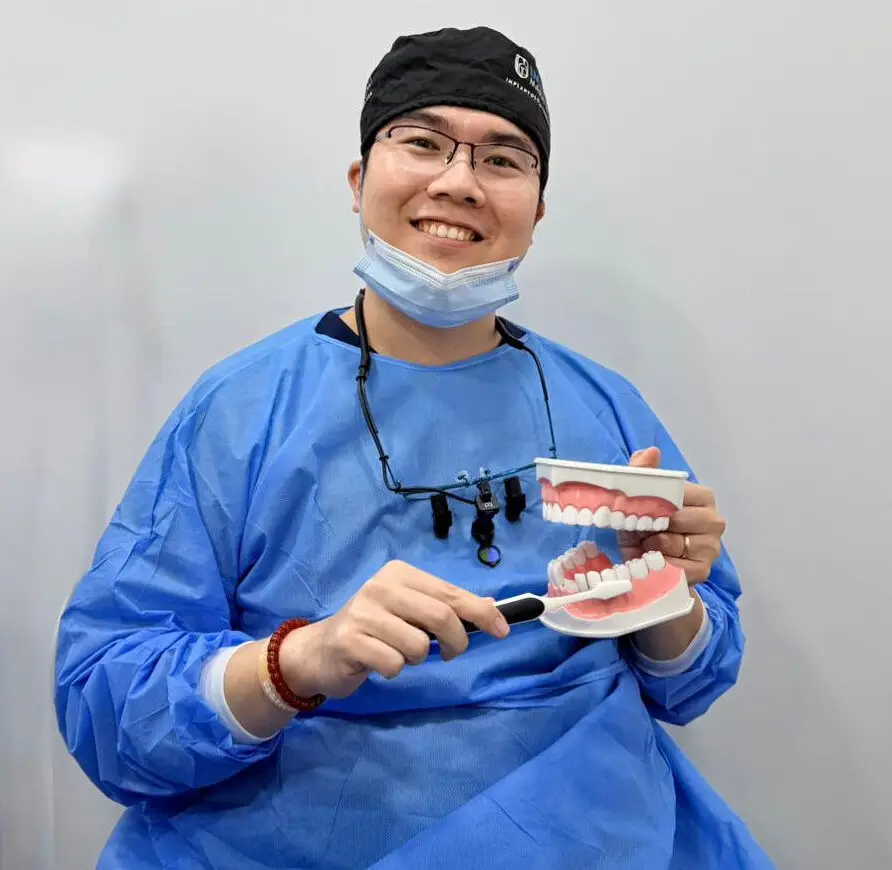
Dental Surgeon, Maple Dental (Kovan) · Last reviewed: May 2026
Dr Lam holds a Bachelor of Dental Surgery from the National University of Singapore and practises general dentistry including orthodontic assessment and clear aligner treatment at Maple Dental (Kovan), Singapore.
Interested in Clear Aligners?
Start with a Consultation.
The first step is a clinical assessment to find out whether clear aligners are suitable for your teeth. Maple Dental offers evening and weekend appointments in Kovan, north-east Singapore.
204 Hougang Street 21 #01-99, Singapore 530204
Tel: 6288 4995 | WhatsApp: 9131 0330
Related Treatments at Maple Dental
{
“@context”: “https://schema.org”,
“@graph”: [
{
“@type”: “MedicalProcedure”,
“name”: “Clear Aligners”,
“alternateName”: “Clear Aligner Orthodontic Treatment”,
“description”: “A series of custom-made removable transparent trays used to gradually move teeth into a more aligned position. Suitable for mild to moderate crowding, spacing, and certain bite issues.”,
“procedureType”: “Therapeutic”,
“bodyLocation”: “Teeth and jaw”,
“preparation”: “Clinical examination, dental X-rays, digital intraoral scan, and full medical and dental history review at consultation.”,
“followup”: “Progress appointments every 6–8 weeks during treatment; long-term retainer wear after treatment completion.”,
“howPerformed”: “Custom transparent aligner trays are worn for 20–22 hours per day and changed every 1–2 weeks to progressively move teeth. Attachments may be bonded to teeth to assist movement.”,
“seriousAdverseOutcome”: [
{“@type”: “MedicalEntity”, “name”: “Root resorption”},
{“@type”: “MedicalEntity”, “name”: “Orthodontic relapse without retainer wear”},
{“@type”: “MedicalEntity”, “name”: “Dental decay if trays worn during eating or drinking”}
],
“recognizingAuthority”: {
“@type”: “Organization”,
“name”: “Singapore Dental Council”,
“url”: “https://www.healthprofessionals.gov.sg/sdc”
},
“relevantSpecialty”: {
“@type”: “MedicalSpecialty”,
“name”: “Orthodontics”
}
},
{
“@type”: “FAQPage”,
“mainEntity”: [
{
“@type”: “Question”,
“name”: “How long does clear aligner treatment take?”,
“acceptedAnswer”: {
“@type”: “Answer”,
“text”: “Treatment length varies depending on the degree of misalignment. Simple cases may be completed in six months or less; moderate comprehensive corrections typically take twelve to eighteen months. Your dentist will provide a timeline at consultation after assessing your case.”
}
},
{
“@type”: “Question”,
“name”: “Do clear aligners hurt?”,
“acceptedAnswer”: {
“@type”: “Answer”,
“text”: “Some pressure and mild discomfort when a new tray is first inserted is normal and typically settles within a couple of days. Clear aligners generally cause less soft-tissue irritation than metal brackets and wires.”
}
},
{
“@type”: “Question”,
“name”: “Can I eat and drink normally with clear aligners?”,
“acceptedAnswer”: {
“@type”: “Answer”,
“text”: “You must remove your aligners before eating and before drinking anything other than plain water. After eating, brush your teeth before reinserting the trays. Eating or drinking with them in can damage the trays and trap food against your teeth.”
}
},
{
“@type”: “Question”,
“name”: “Do I need to wear a retainer after clear aligners?”,
“acceptedAnswer”: {
“@type”: “Answer”,
“text”: “Yes. Retainers are a permanent requirement of all orthodontic treatment. Without consistent retainer wear, teeth will gradually shift back. Most patients wear removable retainers nightly long-term.”
}
},
{
“@type”: “Question”,
“name”: “Are clear aligners as effective as metal braces?”,
“acceptedAnswer”: {
“@type”: “Answer”,
“text”: “For mild to moderate cases, well-executed clear aligner treatment can achieve comparable results to fixed braces. Complex orthodontic cases may be better suited to fixed braces. Your dentist will advise which option is clinically appropriate for your case.”
}
},
{
“@type”: “Question”,
“name”: “Does Maple Dental offer Invisalign in Singapore?”,
“acceptedAnswer”: {
“@type”: “Answer”,
“text”: “Yes. Maple Dental (Kovan) offers Invisalign clear aligners. Invisalign uses SmartTrack thermoplastic trays and ClinCheck digital planning software. It is available in tiers from Invisalign Lite (mild corrections) to Invisalign Comprehensive (more extensive cases). Your dentist will advise which tier is appropriate for your case.”
}
},
{
“@type”: “Question”,
“name”: “What is Smartee and how does it compare to Invisalign?”,
“acceptedAnswer”: {
“@type”: “Answer”,
“text”: “Smartee is a clear aligner system developed in Asia and widely used in Singapore. Like Invisalign, it uses custom transparent trays planned from a digital scan to progressively move teeth. Smartee is suitable for mild to moderate cases and is typically offered at a lower price point than Invisalign. Both systems are available at Maple Dental (Kovan); your dentist will recommend the more appropriate option based on your case complexity and budget.”
}
}
]
},
{
“@type”: “Dentist”,
“@id”: “https://mapledental.sg/#dentist”,
“name”: “Maple Dental”,
“url”: “https://mapledental.sg”,
“telephone”: “+6562884995”,
“address”: {
“@type”: “PostalAddress”,
“streetAddress”: “204 Hougang Street 21 #01-99”,
“addressLocality”: “Singapore”,
“postalCode”: “530204”,
“addressCountry”: “SG”
},
“geo”: {
“@type”: “GeoCoordinates”,
“latitude”: 1.3607,
“longitude”: 103.8850
},
“openingHoursSpecification”: [
{
“@type”: “OpeningHoursSpecification”,
“dayOfWeek”: [“Monday”,”Tuesday”,”Wednesday”,”Thursday”,”Friday”],
“opens”: “09:00”,
“closes”: “21:00”
},
{
“@type”: “OpeningHoursSpecification”,
“dayOfWeek”: [“Saturday”,”Sunday”],
“opens”: “09:00”,
“closes”: “17:00”
}
],
“hasMap”: “https://maps.app.goo.gl/MHUEG6cyH3uxiqtc6”,
“medicalSpecialty”: “Dentistry”
}
]
}